


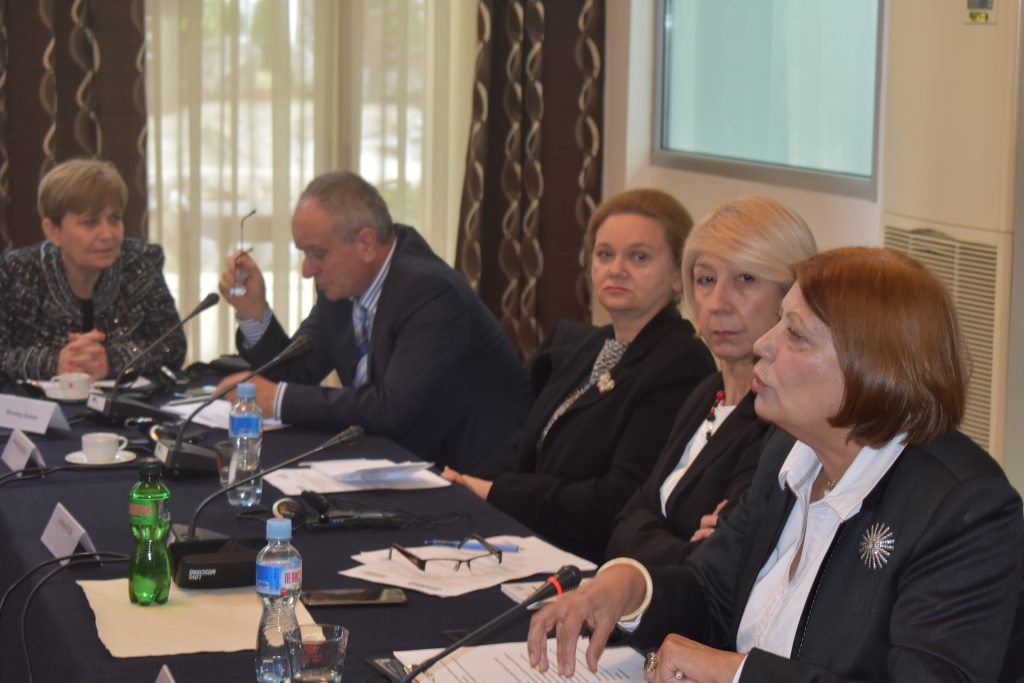
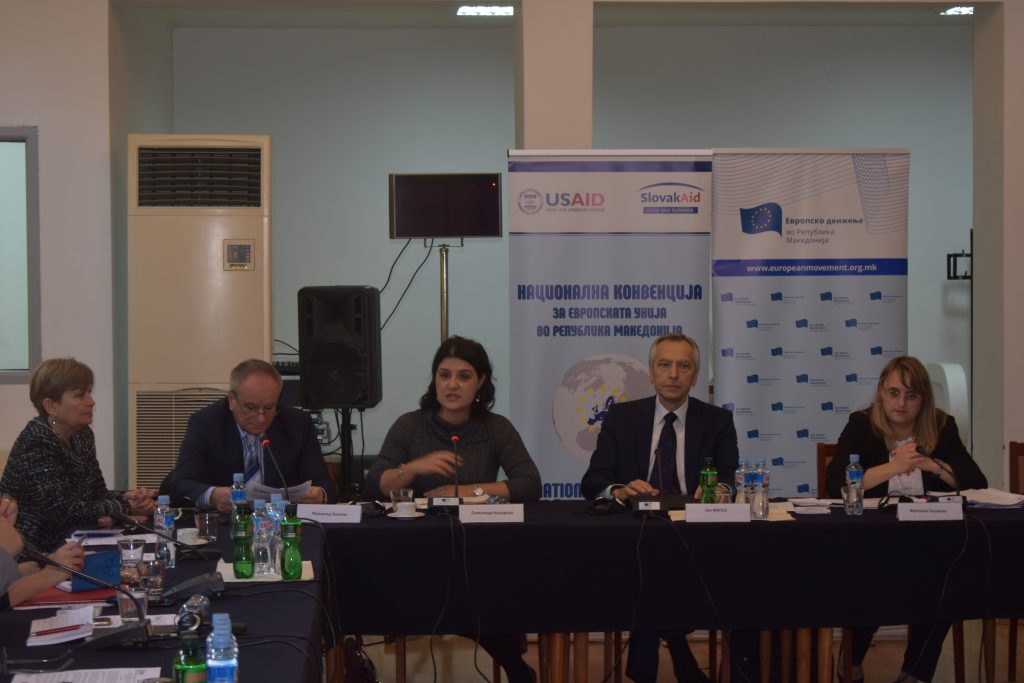
On 15.11.2018 the National Convention on the European Union in the Republic of Macedonia held the third session of Working Group 3 – Judiciary and Fundamental Rights, on the subject of “Accession Talks in Chapter 23: Expectations and Lessons to be Learned”.
“This Session of the National Convention, together with the expert team, underlines the need for building working legal institutions and just state, which is one of the main preconditions for membership in the European Union” said prof. Mileva Gjurovska, National coordinator of NCEU-MK and president of EMRM, during the opening address.
At this third session, the experts were joined by Jan Figel, Former Chief Negotiator of the Slovak Republic for accession to the EU, Former EU Commissioner, and currently Special envoy for the Promotion of Freedom of Religion Belief outside of the EU. He shared his experience of the process and pointed on a few vital negotiation questions mainly from Chapter 23, but also few other chapters.
Mr Figel noted that the European Movement Republic of Macedonia as a founder and main protagonist behind the National Convention on the European Union in the Republic of Macedonia is a good and constructive example of approaching European values and principles, which are based primarily on fundamental human rights. Making a parallel between the then Czechoslovakia and the former Yugoslavia, where new states emerged from the previous communist regimes, he said that in our case, the post-Yugoslav period was much more complicated, considering the
wars in the region. “But there is no peace, if there is no justice and respect for human rights”, said Figel.
Former EU Commissioner Figel also said that EU enlargement is an important process, because it unified Europe, and contributed to better the Member States, themselves. He concluded by saying that the process of enlargement must continue. In doing so, he said, there are three levels that must be achieved, which are: domestic implementation of reforms, regional, such as building good neighbourly relations, and on a continental level, building trust and support.
“Integration begins at home, not in Brussels” he stressed, and urged not to waste time and start the reforms as soon as possible, especially for the judiciary.