


On 12 February, at the Club of Members of Parliament in Skopje, we held the 18th session of Working Group 3 – Judiciary and Fundamental Rights (Chapter 23), within the framework of the National Convention on the European Union in the Republic of North Macedonia (NCEU-MK), organized by the European Movement in North Macedonia. The topic of the session was “European Standards for Disciplinary and Selection Mechanisms in the Judiciary as a Key Element of the Rule of Law.” Participants discussed ongoing reform processes, legislative solutions, and the institutional capacity to ensure a balance between the independence and accountability of judicial bodies.
In his opening remarks, Minister of Justice Igor Filkov emphasized that judicial reforms remain one of the key priorities in the European integration process. He first addressed the reforms of the Judicial Council and the Law on Public Prosecutors. He stated that the reforms to the Judicial Council have already been drafted, the criteria have been tightened, and the procedures for electing members and conducting disciplinary proceedings have been thoroughly regulated. These legislative solutions are expected to strengthen citizens’ trust in the judiciary.
“We have prepared amendments to around thirty laws of essential importance. We have the opportunity to create a judiciary we can rely on, one that is professional, transparent, and impartial. The independence of judges is a central pillar of the rule of law,” Minister Filkov stated.
The Ambassador of the Republic of Slovakia, Iveta Hricova, shared that in her view the topic is not technical, but rather broad and part of everyday life.
“European recommendations provide very clear guidance on what needs to be done and why. It is clear that progress in Chapter 23 is a central issue for North Macedonia’s further advancement toward the EU. It is also an opportunity for all institutions to build democratic capacities and send a strong message. Slovakia remains a strong supporter of North Macedonia and is here to share knowledge and expertise, as well as to present its own shortcomings so they are not repeated.”


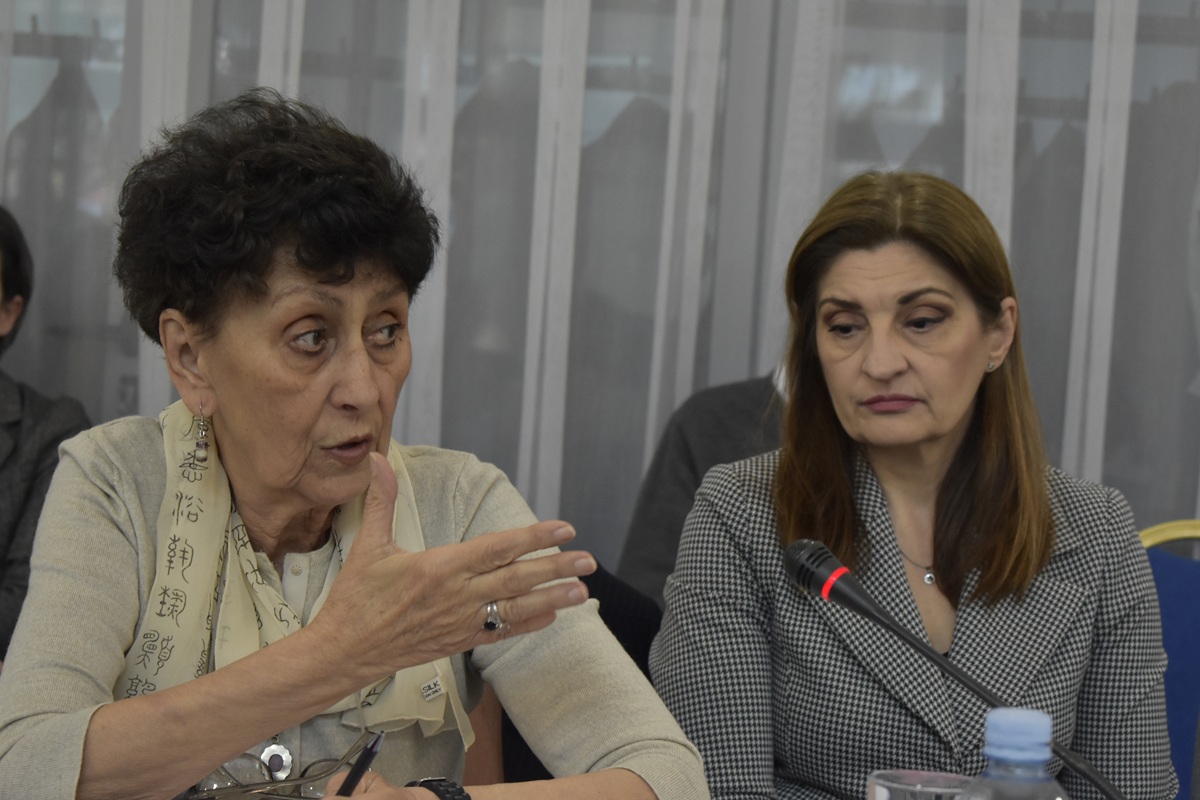

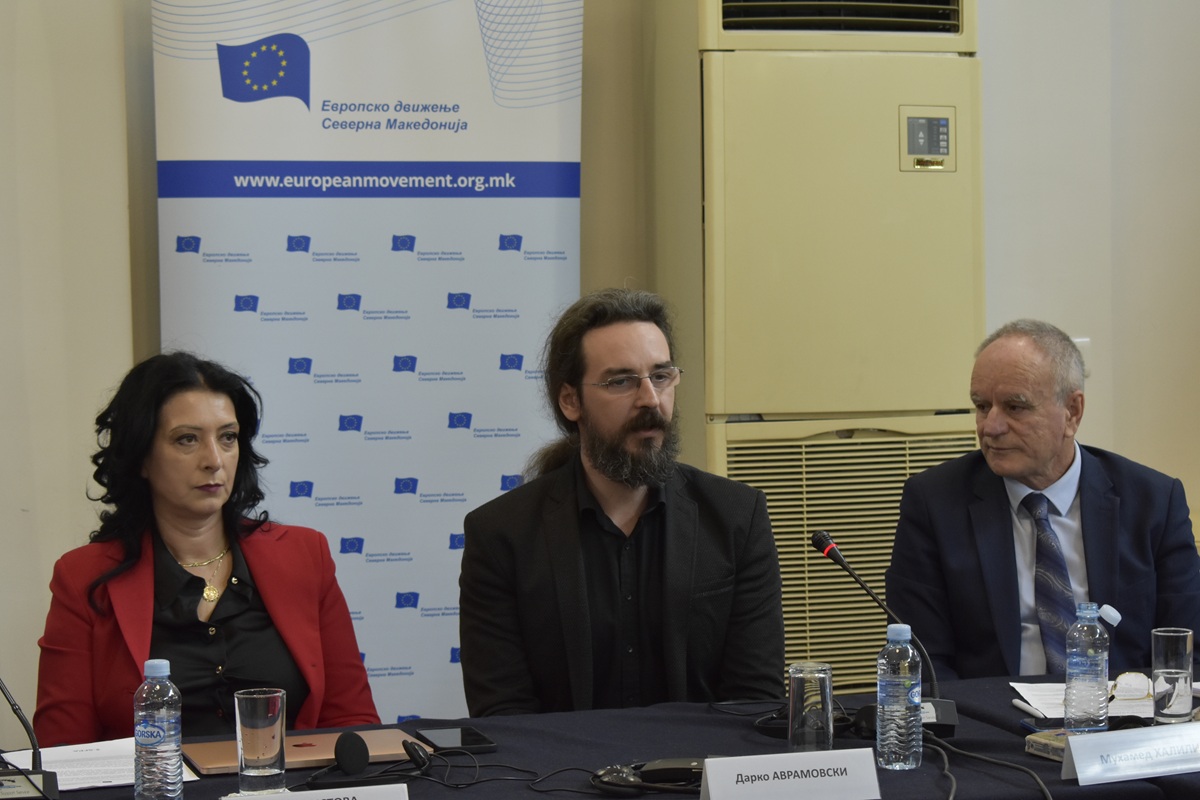


The Director of the Academy for Judges and Public Prosecutors, Irina Trajkoska-Strezoski, referring to the new draft Law on the Academy for Judges and Public Prosecutors currently under preparation, emphasized that professional integrity and continuous training are key to the effective implementation of legislative solutions. She advocated for the new draft law to incorporate all recommendations received so far, from the Venice Commission, the EU Mission, the civil sector, and this Working Group 3 of the NCEU-MK. The amendments aim to tighten the conditions and requirements for candidates, as well as the merit-based system, ensuring that the best candidates are prioritized in appointments and reassignments.
The Ambassador and Head of the OSCE Mission in Skopje, Kilian Wahl, noted that there is no single rulebook for European standards, but there are many good practices and a collective understanding across Europe of what an efficient and professional judiciary should look like.
“A legal framework exists in the country, but consistent implementation is lacking, including within the judicial profession,” Wahl said.
Professor Aleksandra Deanoska-Trendafilova, professor at the Faculty of Law “Iustinianus Primus” and coordinator of Working Group 3 – Judiciary and Fundamental Rights (Chapter 23), referred to the preparation of around ten laws that will soon be adopted, which will bring the country back on track in fulfilling the obligations undertaken in the reform agenda.
“All GRECO recommendations that are not related to constitutional amendments are included in the new laws, which have either already entered or will soon enter parliamentary procedure,” she said, adding that positive changes are also expected in the Public Prosecutor’s Office.
“As a citizen, I expect greater transparency in the decisions of the Judicial Council, where it will be clearly known how many and which members voted for a specific decision. I also expect vetting, not in the political sense of the word, but through the use of mechanisms that already exist and would begin to be used regularly. In that way, the judiciary can be cleared of individuals who do not perform their duties according to expectations,” she concluded.
During the two panel discussions, representatives of the Judicial Council, the Council of Public Prosecutors, the judiciary, the prosecution, academia, and civil society reviewed current legislative solutions and their alignment with European recommendations. Particular emphasis was placed on transparency of procedures, clear criteria for selection and promotion, and disciplinary accountability as a tool for strengthening integrity.
At the end of the session, draft recommendations were presented, which will be further harmonized and submitted to the competent institutions as a contribution of the civil sector to the reform process within the framework of Chapter 23.